Best Puppy Food for English Bulldog Puppies
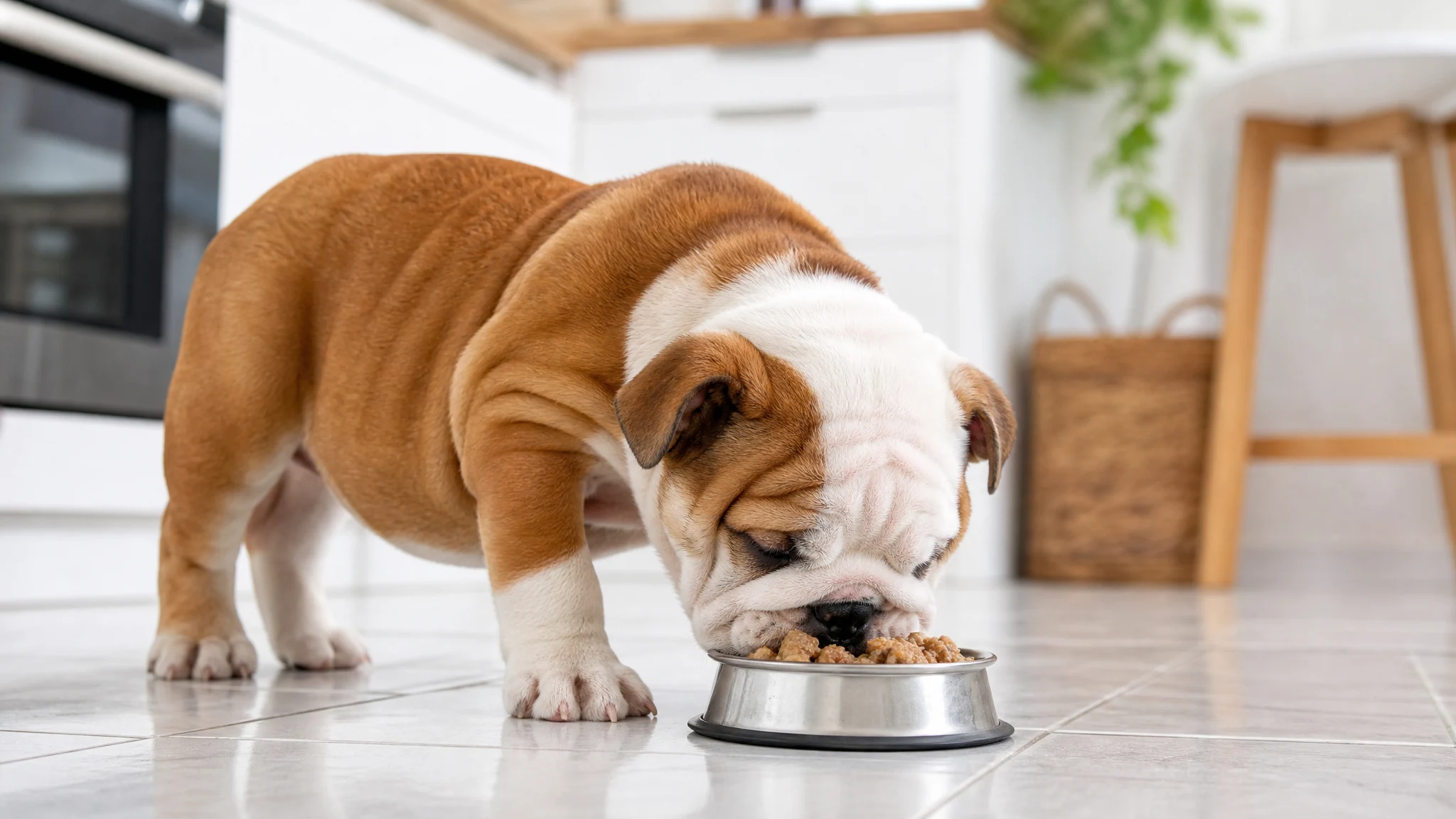
General nutrition information compiled from product labels and published sources, not veterinary advice. Your veterinarian is the right person to choose a diet for your dog, especially one with a health condition.
Choosing English Bulldog puppy food is harder than it looks. The bags use big claims, and the breed is a medium dog of about 40 to 50 pounds as an adult, so "large breed" and "small breed" labels do not map cleanly onto it.
This guide shows how to read a label, which features are worth comparing, and which foods have label data that covers growth. It does not crown one winner. It also does not claim any food will prevent or fix a health problem.
How we compared these foods
We compared label data: the nutritional adequacy statement, the first ingredients, the guaranteed analysis or average nutrient content, and the calories the brand lists. We did not run feeding trials or taste tests, and we have not fed any of these foods to a dog.
We also have no prices, ratings or recall histories, so we leave them out. Check the brand's own page for current pricing and availability.
Only foods whose label statement covers growth are included below. That means a "growth" statement or an "all life stages" statement. Adult maintenance foods are left out on purpose.
What a Bulldog puppy food needs to be
Start with the adequacy statement
This one line matters more than any front-of-bag claim. Look for wording that the food is formulated to meet the AAFCO Dog Food Nutrient Profiles for growth, or for all life stages. A food labelled only for adult maintenance is not meant for a growing puppy.
The statement can be backed in two ways. Some are "formulated to meet" the profile. Others say animal feeding tests using AAFCO procedures substantiate the claim. Both are legitimate routes. The feeding-test wording is a different kind of evidence, but it does not by itself make one food better.
Check the large-size wording, then decide if it applies
According to Whole Dog Journal's explanation of nutritional adequacy statements, foods labelled as including growth of large-size dogs (70 pounds or more as an adult) suit large-breed puppies. Foods labelled "except for growth of large-size dogs" should not be fed to them. Smaller-breed puppies can eat either kind.
The Bulldog Club of America's breed standard describes mature dogs at about 50 pounds and mature bitches at about 40 pounds. PetMD gives roughly 40 to 50 pounds. That is well under 70 pounds, so the large-size rule is not the deciding factor for this breed. It still helps to read the statement, since it tells you what the food was built for.
Read the first five ingredients
Ingredients are listed by weight before cooking, so the first few tell you the base of the food. Look for a named animal protein (chicken, chicken meal) rather than a vague term. Note which carbohydrate sources follow, such as rice, oats or barley.
Do not treat an ingredient list as a quality score. A by-product meal is not automatically poor, and a whole meat first is not automatically better once water is counted. Compare the list with the nutrient numbers instead of judging by the first word.
Compare calories, not just cups
PetMD says the Bulldog is prone to obesity and that extra weight makes other conditions worse, including breathing trouble linked to the flat-faced anatomy and hip dysplasia. For a puppy, that makes calorie density worth knowing. Two foods can look similar in the bowl and differ by a hundred calories per cup.
Be careful comparing nutrient percentages
Some brands list guaranteed analysis "as fed". Hill's publishes average nutrient content on a dry-matter basis, which removes moisture. Those numbers are not guaranteed minimums, and they cannot be set side by side with an as-fed figure. A wet or fresh food with a low protein percentage may be just as concentrated once its water is removed.
The foods with growth-covering labels
These are the foods in our research whose adequacy statement covers growth. Each is described only by what the brand publishes. Hill's, Victor, Nom Nom and JustFoodForDogs were not made for Bulldogs, and we note where a food is sized for a different breed.
Royal Canin Bulldog Puppy (dry)
This is the only food here made specifically for Bulldog puppies, aged 8 weeks to 15 months. Royal Canin's page says it is formulated to meet the AAFCO Dog Food Nutrient Profiles for growth. We could not confirm whether the label adds a large-size qualifier, so check the bag. That matters little for a breed of this size.
- First five ingredients: chicken by-product meal, brewers rice, brown rice, chicken fat, wheat gluten.
- Guaranteed analysis, as fed: protein 28.0 percent minimum, fat 15.0 percent minimum, fiber 4.0 percent maximum.
- Calories: 338 kcal ME per cup, as fed (calculated).
- Kibble size: the brand describes a wave shape but does not state a size.
The feeding table is set by puppy age and target adult weight. The brand's page can be found at Royal Canin's Bulldog Puppy page.
Victor Hi-Pro Plus Large Breed Puppy (dry)
The name says large breed puppy, but Victor's page gives the adequacy statement as the AAFCO Dog Food Nutrient Profiles for all life stages. All life stages includes growth. We could not confirm whether the label adds the "including growth of large size dogs" wording.
- First five ingredients: chicken, chicken meal, brown rice, whole grain millet, whole grain sorghum.
- Guaranteed analysis, as fed: protein 30 percent minimum, fat 14.0 percent minimum, fiber 6.0 percent maximum.
- Calories: 365 kcal per cup.
The published feeding guidance mentions adding food for dogs over 100 pounds, which is far above a Bulldog's weight. Use the guide's lower weight rows and ask your veterinarian about amounts. See Victor's product page.
Hill's Science Diet Puppy Large Breed Chicken & Brown Rice (dry)
Hill's states that animal feeding tests using AAFCO procedures substantiate that this recipe provides complete and balanced nutrition for growing puppies. It is made for large-breed puppies who will weigh over 55 pounds as adults, up to 18 months.
That is above an English Bulldog's usual weight, so this is not a Bulldog formula. We list it only because some owners look at large-breed puppy foods when thinking about growth and joints. Ask your veterinarian whether it suits your dog before you consider it.
- First five ingredients: chicken, brown rice, whole grain oats, chicken meal, cracked pearled barley.
- Average nutrient content, dry matter basis: protein 26.7 percent, fat 15.4 percent, fiber 2.8 percent. These are averages, not guaranteed minimums.
- Calories: 387 kcal per cup.
It is the most calorie-dense dry food on this list by the brand's figures. Details are on Hill's Pet product page.
Nom Nom Chicken Cuisine (fresh)
Nom Nom's statement says the food meets the AAFCO Dog Food Nutrient Profiles for all life stages, including growth of large size dogs (70 lb. or more as an adult). That wording covers puppies of any size.
- First five ingredients: chicken, sweet potatoes, squash, spinach, dicalcium phosphate.
- Guaranteed analysis, as fed: protein 6.5 percent minimum, fat 4.5 percent minimum, dietary fiber 3.5 percent maximum.
- Calories: 244 kcal per cup.
The ingredient list shows no grains. The brand does not state this as a claim, so we are inferring it from the list. The low percentages reflect moisture, not a thin recipe. The brand's feeding guide is for a full Nom Nom diet. See Nom Nom's Chicken Cuisine page.
JustFoodForDogs Pantry Fresh Chicken & Rice (fresh pouch)
JustFoodForDogs states this pouch is formulated to meet the AAFCO Dog Food Nutrient Profiles for all life stages, and says it suits puppies, adults, and pregnant and lactating dogs.
- First five ingredients: chicken breast, chicken thighs, chicken liver, long-grain white rice, kale.
- Guaranteed analysis, as fed: protein 6.5 percent minimum, fat 2.5 percent minimum, fiber 1.0 percent maximum.
- Calories: 31 kcal ME per ounce (387.5 kcal ME per 12.5 ounce pouch). The brand does not list a per-cup figure.
The feeding guide is an on-site calculator, not a printed table, so use it with your veterinarian's advice. The product page is on JustFoodForDogs.
Side-by-side label data
| Food | Form | Statement covers | Calories (brand figure) | Made for Bulldogs? |
|---|---|---|---|---|
| Royal Canin Bulldog Puppy | Dry | Growth | 338 kcal per cup | Yes |
| Victor Hi-Pro Plus Large Breed Puppy | Dry | All life stages | 365 kcal per cup | No |
| Hill's Puppy Large Breed | Dry | Growing puppies | 387 kcal per cup | No, sized for dogs over 55 lb |
| Nom Nom Chicken Cuisine | Fresh | All life stages, including large-size growth | 244 kcal per cup | No |
| JustFoodForDogs Pantry Fresh Chicken & Rice | Fresh pouch | All life stages | 31 kcal ME per ounce | No |
Calorie figures describe the food as sold, so a fresh food with a lower number per cup is not necessarily a lighter meal. The numbers only help you compare a cup with a cup.
Picks at different price points
We cannot rank these by cost. We have no current prices and will not guess at them. What we can do is group the foods by type, since type affects how much you spend and how much work feeding takes.
- Dry foods: Royal Canin Bulldog Puppy, Victor Hi-Pro Plus Large Breed Puppy and Hill's Puppy Large Breed. Dry food is the easiest to measure and store.
- Fresh foods: Nom Nom Chicken Cuisine and JustFoodForDogs Pantry Fresh. These need more attention to storage and portioning, and you will want to check the brand's page for cost per day at your puppy's weight.
To compare cost fairly, divide the price by the number of days the bag or box lasts at the label's starting amount for your puppy's weight. That daily figure tells you more than the sticker price.
Feeding amounts and meal frequency
Every feeding table on these labels is a starting point. Puppies differ in build, activity and growth rate, so adjust with your veterinarian rather than treating the chart as a rule.
PetMD advises feeding adult Bulldogs twice daily, with portions based on ideal weight. It also says treats should be no more than 10 percent of daily calories and that slow feeder bowls can slow eating. We found no source in our research giving a puppy-specific meal count for the breed, so ask your breeder or veterinarian how to split the daily amount. Brands list daily totals, not a number of meals.
Keep an eye on body condition. Because PetMD notes the breed's tendency to gain weight, your veterinarian can tell you whether your puppy is on track and whether to adjust the amount.
Growth and the switch to adult food
We did not find reliable breed-specific growth benchmarks in our research, so we will not offer a growth chart. Ask your veterinarian or the breeder for a weight range suited to your dog, and check with the Bulldog Club of America for breed-specific guidance.
On timing, the manufacturers disagree. Royal Canin's Bulldog Adult page describes the adult formula for Bulldogs 12 months and older. Its Bulldog Puppy page says to move to adult food after 15 months. Hill's large-breed puppy food runs to 18 months, but that is for larger dogs.
These are manufacturer figures, not a veterinary or club standard. Your veterinarian can set the switch date based on your puppy's condition. When you do switch, mix the new food in gradually over several days.
Red flags to avoid
- No adequacy statement. If you cannot find AAFCO wording on the bag, do not feed it as a main diet to a puppy.
- An adult maintenance statement. That is for adult dogs, not growth.
- Health claims. A food that says it prevents or cures hip dysplasia, allergies, heart disease or bloat is making a promise the label cannot support. A veterinarian decides what a dog with a medical condition should eat, and prescription diets come only from a veterinarian.
- Language promising results. No food can promise an outcome.
- Treating "grain free" as a quality mark. The FDA's last public update on its diet and canine dilated cardiomyopathy investigation was December 23, 2022. It says report counts alone do not establish a causal link, and that it does not plan further public updates until there is meaningful new science. None of the foods above is labelled grain free. Ask your veterinarian before choosing any food on this basis.
- Copying a different breed's food. The Royal Canin French Bulldog loaf is a flat-faced breed formula, not an English Bulldog formula, and it is an adult food, so it is not covered here.
- Making sudden food changes. Switching all at once is a common cause of an upset stomach.
Where to buy
Each brand's own website is the best place to confirm the current formula, the full label and the feeding guide. Ingredients and recipes change, so compare the bag in your hands with the brand's page before the first scoop.
Fresh and subscription foods are sold by the brand, and the brand's page explains how to order them. For dry food, look at the brand's store finder or ask your veterinarian where they recommend. Whichever route you take, check the best-by date and avoid damaged or torn bags.
A short checklist
- Find the AAFCO statement and confirm it covers growth or all life stages.
- Read the first five ingredients and note the main protein and carbohydrate.
- Compare calories per cup, not only protein percentages.
- Check whether nutrient figures are as fed or dry matter before comparing.
- Start with the label's feeding guide for your puppy's weight, then adjust with your veterinarian.
- Plan the switch to adult food with your veterinarian, keeping the 12 versus 15 month difference in mind.
Sources
- Bulldog Club of America, AKC Bulldog Breed Standard
- PetMD, Bulldog breed page
- Whole Dog Journal, In the Fine Print: Nutritional Adequacy Statements
- FDA Center for Veterinary Medicine, investigation into diets and canine dilated cardiomyopathy
- Royal Canin, Bulldog Puppy
- Royal Canin, Bulldog Adult
- Victor, Hi-Pro Plus Large Breed Puppy
- Hill's Pet, Science Diet Puppy Large Breed
- Nom Nom, Chicken Cuisine
- JustFoodForDogs, Pantry Fresh Chicken & Rice