Bulldog Food Allergies vs Environmental Allergies: Telling Them Apart
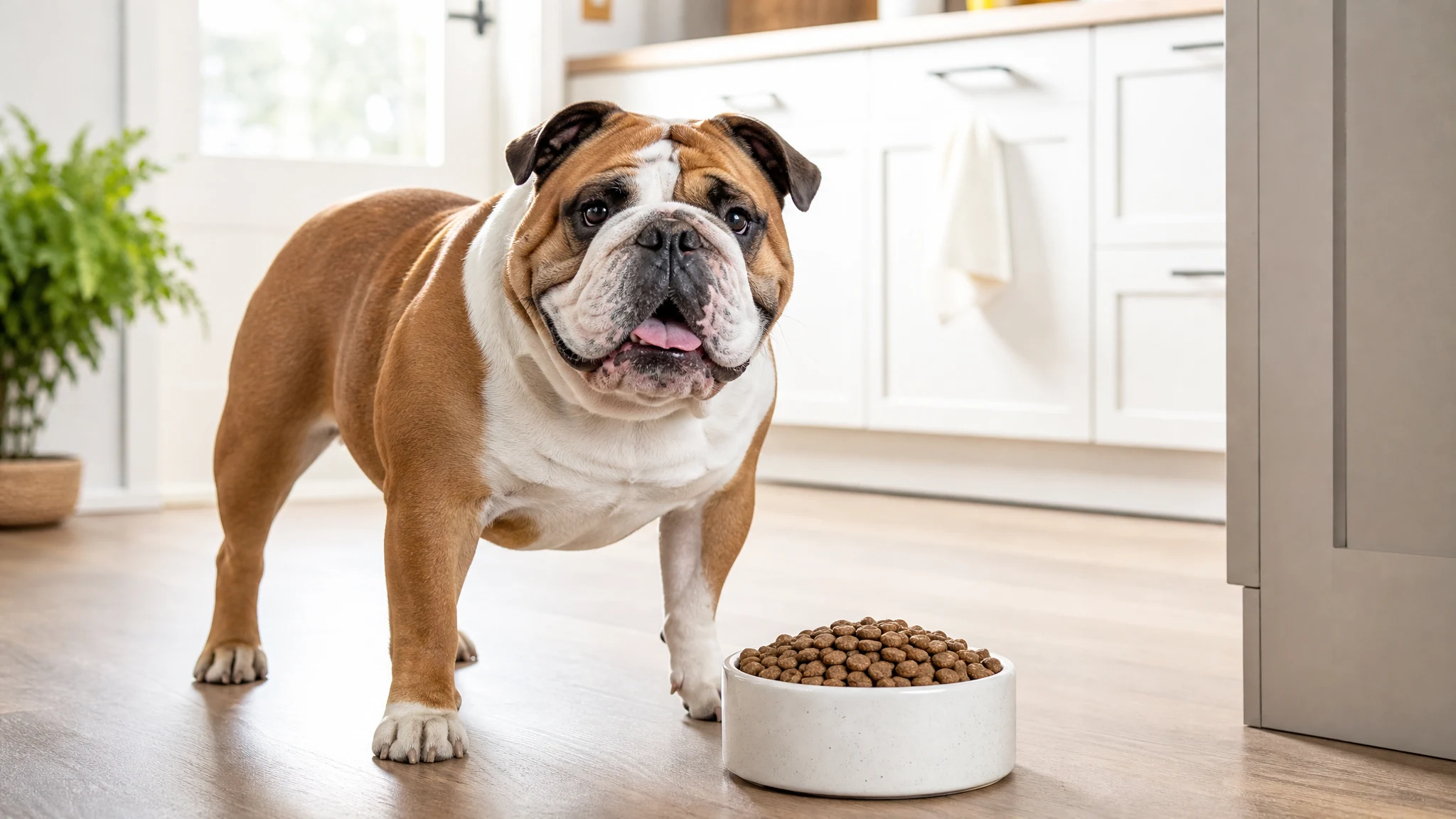
General nutrition information compiled from product labels and published sources, not veterinary advice. Your veterinarian is the right person to choose a diet for your dog, especially one with a health condition.
An English Bulldog that scratches, chews its paws or smells yeasty is hard to read. The cause could be food, pollen, dust, fleas or trapped moisture in the skin folds. Many owners jump straight to blaming the kibble.
This guide shows how to gather useful evidence at home so your veterinarian can sort out the cause. It cannot diagnose your dog, and it does not replace an exam. Bulldog food allergies are one possibility among several, and the label of a food cannot tell you whether it will suit your dog.
What the Sources Say About Allergies in the Breed
The PetMD Bulldog breed page says environmental, food and flea allergies can all cause skin problems in the breed. It adds that some dogs need a special diet to manage them. That is a good reason to treat food as one suspect, not the only one.
PetMD also lists skin fold pyoderma as a separate issue. Moisture trapped in facial and body folds encourages infection, and the fix is cleaning and drying the folds. It is not a diet problem in itself, but it can look like an allergy flare, so mention your dog's folds to your vet.
Materials You Will Need
- A notebook or phone notes app for a daily symptom log
- Dated photos of red spots, paws, ears and skin folds
- The bag, can or pouch of your dog's current food, so you can copy the full label
- A list of every treat, chew, dental stick, flavored medication and table scrap your dog gets
- Your flea and tick prevention records
- A kitchen scale or measuring cup, so portions stay consistent
- An appointment with your veterinarian
Step-by-Step: Gathering the Clues
Step 1: Rule out the easy suspects first
Before you think about food, ask your vet to check for fleas, skin infection in the folds and ear infections. PetMD names flea allergies as one cause of skin problems in Bulldogs, and a dog can have more than one problem at once. Treating the wrong cause wastes weeks.
Clean and dry the facial and body folds as your vet advises. If the skin settles when the folds are kept dry, that tells you something too.
Step 2: Start a daily symptom log
Write down the date, itch level on a simple 0 to 3 scale you choose, where the dog is itching, and any ear or stool changes. Add the weather, whether windows were open, and whether you mowed, dusted or changed laundry soap. A log kept for several weeks shows patterns that memory misses.
Step 3: Look at the timing
Timing is a clue, not proof. Patterns that may point toward environmental triggers include:
- Itching that gets worse in certain seasons
- Flares after walks through grass, or after cleaning or dusting
- Symptoms that ease when the dog is in a different place
Patterns that may point toward food include itching that stays about the same all year, and flares that follow a new food or treat. Even so, these patterns overlap. A dog can react to both food and the environment, so ask your vet to interpret your log.
Step 4: Write out exactly what your dog eats
Copy the first five ingredients and the AAFCO statement from the main food. Then list every treat and chew. Owners are often surprised that a "hypoallergenic" sounding treat shares a protein with the main food, or that a flavored chew adds a new one.
Do not change the food yet. A clear baseline matters more than a quick switch.
Step 5: Ask your vet about a structured diet trial
If your vet suspects food is involved, they may suggest a controlled diet trial. This means feeding one carefully chosen diet, and nothing else, for a period your vet sets. The PetMD page notes that some dogs need a special diet to manage allergies, and that is a decision for a veterinarian. Prescription diets are something only a veterinarian prescribes.
Your vet may also tell you to stop flavored medications and chewable preventives during the trial. Follow their instructions on everything, including treats.
Step 6: Keep portions steady and weight lean
PetMD describes Bulldogs as prone to obesity and says extra weight worsens other conditions. It also says flat-faced anatomy causes breathing difficulty and overheating, and that excess weight makes those signs worse. PetMD's feeding advice for adults is two meals a day, portions based on ideal weight, and treats at no more than 10 percent of daily calories.
Any new food should be started at the label's starting amount and adjusted with your vet, not poured freely.
Step 7: Review the log with your vet and decide next steps
Bring the log, photos, labels and treat list. Your vet may suggest a food change, environmental management, treatment for skin or ear infection, or further testing. Ask what result would count as improvement and how long to wait before judging it.
How We Compared Foods, and What the Labels Show
We compared label data published on brand pages. We did not run feeding trials or taste tests, and nothing here suggests any food prevents, treats or cures a skin problem. Use the comparison to see how labels differ, then take your questions to your vet.
| Food | AAFCO life stage | Protein / fat | Calories | First ingredients |
|---|---|---|---|---|
| Royal Canin Bulldog Adult (dry) | Maintenance | 22% / 12% min, as fed | 277 kcal ME per cup | Brewers rice, oat groats, chicken by-product meal, brown rice, wheat gluten |
| Royal Canin Bulldog Puppy (dry) | Growth | 28% / 15% min, as fed | 338 kcal ME per cup | Chicken by-product meal, brewers rice, brown rice, chicken fat, wheat gluten |
| Hill's Science Diet Adult Chicken & Barley Entree (canned) | Maintenance (feeding tests) | 26.7% / 16.7%, dry matter average | 369 kcal per 13 oz can | Water, chicken, pork liver, whole grain corn, cracked pearled barley |
| Freshpet Home Cooked Chicken Recipe (fresh) | Adult maintenance | 15% / 11% min, as fed | 189 kcal per cup | Chicken, eggs, cranberries, carrots, ground oats |
Three things stand out. First, the Hill's figures are dry matter averages, not guaranteed minimums, so they cannot be set side by side with the as-fed numbers. Second, calories per cup vary a lot, so a cup of one food is not a cup of another. Third, chicken in some form leads several of these lists. If a vet is trying to find out which protein is a problem, a repeated ingredient across your dog's food and treats is exactly what to flag.
Royal Canin's Bulldog Adult page describes its formula for Bulldogs 12 months and older, while the Bulldog Puppy page says to move to adult after 15 months. Ask your vet when to switch. Royal Canin's French Bulldog loaf is made for a different breed and is not an English Bulldog formula. For the full label breakdown, see our English Bulldog foods compared by label.
You can read each label on the brand's own pages: Royal Canin Bulldog Adult, Hill's Science Diet Adult Chicken & Barley and Freshpet Home Cooked Chicken.
Tips and Common Mistakes
- Switching foods every few weeks. Frequent changes make it impossible to tell what helped or hurt. Change one thing at a time and log it.
- Forgetting treats. A single flavored chew can undo a careful plan.
- Assuming grain-free means allergy-friendly. A grain-free label does not say a food avoids the protein your dog reacts to. The FDA also investigated a potential link between certain diets and canine dilated cardiomyopathy. Its last public update was December 23, 2022, and FDA says report counts alone do not establish a causal link. Ask your vet before choosing a diet on that basis.
- Buying a large breed formula for the weight. An adult English Bulldog is a medium dog, about 40 to 50 lb by the Bulldog Club of America breed standard and PetMD. Large breed foods are labelled for bigger dogs, so they are not designed around Bulldogs.
- Ignoring the folds. Moist folds can cause itching and odor that look like allergy.
- Using supplements or home recipes without guidance. Ask your vet first, especially during a diet trial.
What to Expect
A careful log and a vet-guided plan may help narrow down the likely cause. Some dogs may show less itching after a food change, some after environmental changes, and some need both. Results vary, and it can take several visits to find an answer. Allergies in many dogs are managed over time rather than solved once.
If your dog has swelling of the face, trouble breathing, repeated vomiting or open, bleeding skin, call your veterinarian promptly. Bulldogs already have airway challenges, so do not wait on those signs.
Sources
- PetMD, Bulldog breed page
- Bulldog Club of America, AKC Bulldog Breed Standard
- FDA CVM, Investigation into Potential Link between Certain Diets and Canine Dilated Cardiomyopathy
- Royal Canin US, Bulldog Adult
- Royal Canin US, Bulldog Puppy
- Hill's Pet, Science Diet Adult Chicken & Barley Entree
- Freshpet, Fresh From the Kitchen Home Cooked Chicken Recipe