Bulldog Puppy Food: Switching From a Puppy to an Adult Formula
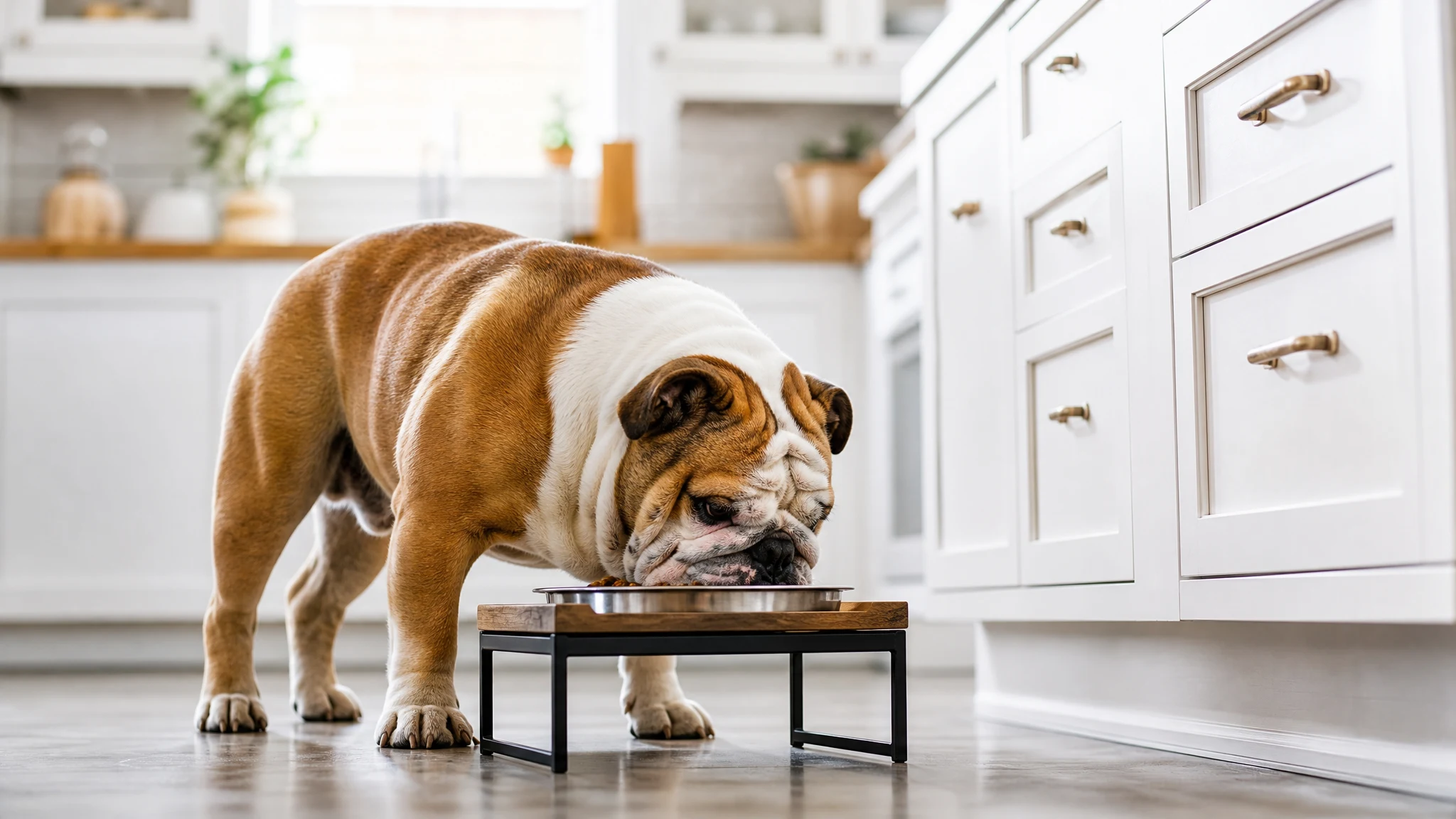
General nutrition information compiled from product labels and published sources, not veterinary advice. Your veterinarian is the right person to choose a diet for your dog, especially one with a health condition.
Moving an English Bulldog from a puppy formula to an adult one sounds simple. In practice, two questions trip people up: when to do it, and how fast. This guide walks through both, using label data and the manufacturer's own wording.
The goal is a calm, gradual change that keeps your dog at a lean, healthy weight. That matters for this breed. PetMD notes that Bulldogs are prone to obesity, and that extra weight worsens other conditions.
When Is an English Bulldog Ready for an Adult Formula?
There is no single universal date. The age depends on whose guidance you follow, and the sources do not agree exactly.
- The Royal Canin Bulldog Adult page describes its formula for purebred Bulldogs 12 months and older.
- The Royal Canin Bulldog Puppy page says to move to the adult formula after 15 months.
Both are manufacturer guidance, not a veterinary or breed club rule. So think of 12 to 15 months as a window to discuss with your vet. Your vet can judge whether your own dog is still growing or is already carrying too much weight.
The Bulldog Club of America breed standard lists a mature dog at about 50 lb and a mature bitch at about 40 lb. This is a medium breed, so the large-breed puppy rules do not apply. AAFCO's "large-size dogs (70 pounds or more as an adult)" wording, as explained by Whole Dog Journal, is aimed at much bigger dogs.
Why the Formulas Differ
It helps to see the difference on paper. Here is a comparison of the Royal Canin Bulldog puppy and adult dry foods. We compared label data from the brand's pages. We did not run feeding trials or taste tests.
| Label detail | Bulldog Puppy | Bulldog Adult |
|---|---|---|
| Crude protein (min, as fed) | 28.0% | 22.0% |
| Crude fat (min, as fed) | 15.0% | 12.0% |
| Crude fiber (max, as fed) | 4.0% | 4.1% |
| Calories (calculated) | 338 kcal ME per cup | 277 kcal ME per cup |
| First five ingredients | Chicken by-product meal, brewers rice, brown rice, chicken fat, wheat gluten | Brewers rice, oat groats, chicken by-product meal, brown rice, wheat gluten |
The calorie gap is the detail that matters most. A cup of the puppy food has about 61 more kilocalories than a cup of the adult food, going by the brand's figures. If you switch foods but keep scooping the same amount, your dog's calorie intake changes without you noticing. The adult formula also has lower protein and fat minimums.
Both pages say the food is formulated to meet the nutritional levels in the AAFCO Dog Food Nutrient Profiles, for growth in the puppy food and for maintenance in the adult food. Check the full statement on the bag you buy, since wording can change.
Materials You Will Need
- Your current bulldog puppy food, with enough left to finish the transition.
- The new adult food, in the formula your vet has approved.
- A standard measuring cup, or a kitchen scale if you prefer to weigh portions.
- The feeding guide printed on the new bag or on the brand's page.
- A notebook or phone note to log meals, stools and weight.
- Optional: a slow feeder bowl. PetMD mentions these can slow eating.
Step-by-Step: Making the Switch
Step 1: Check with your vet first
Ask your vet whether your Bulldog is ready, and which adult food suits your dog. This is especially important if your dog has skin problems, a suspected food allergy, or any health condition. PetMD notes that some dogs need a special diet for allergies, and that decision belongs to a veterinarian. Prescription diets are only something a vet can prescribe.
Step 2: Pick your target age window
Use the 12 to 15 month window above as a starting point. If your dog is already overweight, say so at that visit. Weight, not just age, can shape the timing.
Step 3: Read the new label
Look at the AAFCO statement, the ingredient list, the guaranteed analysis and the calories per cup. Make sure the statement says the food is for adult maintenance or all life stages. Some brands publish nutrient numbers on a dry matter basis rather than as fed, so compare like with like. Hill's, for example, lists dry matter averages rather than guaranteed minimums.
Be careful with size-based product names. Hill's Science Diet Large Breed foods, for instance, are labelled for dogs expected to reach 55 lb or more as adults. They are not made for English Bulldogs, who are usually 40 to 50 lb. Royal Canin's French Bulldog canned food is likewise a French Bulldog formula, not an English Bulldog one.
Step 4: Start with a small share of the new food
A common approach is to spread the change over about a week or longer. This is general feeding practice rather than a rule from the sources above, so follow the brand's instructions or your vet's advice if they differ. One example schedule:
- Days 1 to 3: about one quarter new food, three quarters puppy food.
- Days 4 to 6: about half and half.
- Days 7 to 9: about three quarters new food, one quarter puppy food.
- Day 10 onward: all new food, if stools and appetite have stayed normal.
Mix the foods together in the bowl so your dog cannot pick out the old kibble. If your dog's stomach seems unsettled, slow down and hold at the current step for a few extra days.
Step 5: Recalculate the portion
Do not carry over the puppy scoop. Use the new bag's feeding table as a starting point. The Royal Canin Bulldog Adult table, for example, goes by weight and activity level. It lists a 40 lb dog at low activity at 2 7/8 cups (219 g) per day. That is one example from one brand, not a target for your dog.
PetMD advises basing portions on your dog's ideal weight, not current weight. Adjust up or down based on how your dog looks and feels. Your vet can show you how to judge body condition.
Step 6: Set the schedule
PetMD suggests feeding adult Bulldogs twice a day. Keep meals at the same times each day. Divide the daily amount into two meals rather than putting it all in one bowl.
For amounts by age during growth, see our guide to a feeding chart for English Bulldogs by age.
Step 7: Count the treats
PetMD recommends keeping treats to no more than 10% of daily calories. Treats given during the transition count too. If you give a lot of training rewards, take them out of the meal portion or choose small, low-calorie ones.
Step 8: Weigh and review
Weigh your dog every couple of weeks during the first month or two, and log the numbers. Look for a visible waist and ribs you can feel without pressing hard. Share the log with your vet at the next visit.
Tips for a Smoother Change
- Change only the food. Avoid adding a new treat, chew or topper at the same time, so you can tell what caused any reaction.
- Finish the transition before travel, boarding or other disruptions.
- Use a slow feeder bowl if your dog gulps food. PetMD notes it can slow eating.
- Keep fresh water available, especially in warm weather. Flat-faced Bulldogs can overheat, and PetMD links their airway anatomy to breathing difficulty.
- Store the new food sealed and read the date on the bag.
Common Mistakes to Avoid
- Switching all at once. A sudden change can upset some dogs' digestion. A gradual mix is gentler.
- Keeping the puppy portion. Because the puppy food is more calorie dense per cup, the same scoop of a lower-calorie adult food changes the total. Measure again.
- Staying on puppy food too long. A growth formula is not meant to be the permanent diet. Ask your vet when to stop.
- Choosing by breed-sounding names. Read the label. Size or breed wording on the front is marketing, and the AAFCO statement and numbers are what tell you about the food.
- Treating weight as a cosmetic issue. PetMD says extra weight worsens hip dysplasia and makes breathing problems from flat-faced anatomy worse.
- Expecting food to fix a health problem. No food prevents or cures conditions such as allergies or hip dysplasia. A vet decides what an individual dog needs.
- Assuming grain-free means better. The FDA has investigated a possible link between certain diets and canine dilated cardiomyopathy. Its last public update was December 23, 2022, and it said report counts alone do not establish a causal link. If you are weighing this, ask your vet.
What to Expect
Many dogs adjust to a new food within a couple of weeks. Stools may change a little at first, and they often settle as the transition finishes. A steady appetite, normal energy and a healthy weight are reasonable signs that things are going well.
Results vary between dogs, and no food can promise a particular outcome. Call your vet if you see ongoing vomiting, diarrhea, itching, lethargy or a loss of appetite. Do not wait it out.
Quick Recap
- Talk to your vet about timing, usually in the 12 to 15 month window.
- Read the adult label and compare calories per cup.
- Mix gradually over about a week or more.
- Recalculate the portion from the new feeding guide.
- Feed twice daily and keep treats to 10% of calories or less.
- Weigh regularly and adjust with your vet.
Sources
- Bulldog Club of America, AKC Bulldog Breed Standard
- PetMD, Bulldog breed page
- Royal Canin US, Bulldog Adult product page
- Royal Canin US, Bulldog Puppy product page
- Hill's Pet, Science Diet Adult Large Breed page
- Whole Dog Journal, In the Fine Print: Nutritional Adequacy Statements
- FDA CVM, Investigation into Potential Link between Certain Diets and Canine Dilated Cardiomyopathy