Human Foods English Bulldogs Should Never Eat
General nutrition information compiled from product labels and published sources, not veterinary advice. Your veterinarian is the right person to choose a diet for your dog, especially one with a health condition.
Most owners ask the same thing sooner or later: can English Bulldogs eat what is on my plate? This page answers the common questions, grouped by theme. The toxic foods named here come from the ASPCA Animal Poison Control list of people foods that are dangerous for dogs.
No list covers every case. If your dog has eaten something and you are worried, skip to the emergency section.
The basics
What human foods can't dogs eat?
The ASPCA Animal Poison Control list includes chocolate, grapes and raisins, xylitol, onions and garlic, macadamia nuts, alcohol, coffee and caffeine, and raw yeast dough. Some of these cause stomach upset. Others can affect the kidneys, nerves or blood. This applies to every breed, English Bulldogs included.
What can English Bulldogs not eat that other dogs can?
No toxic food is different for Bulldogs. The breed differences are about weight and airways. PetMD says Bulldogs are prone to obesity, and extra weight makes breathing trouble and joint problems worse. So rich, fatty scraps that other dogs may handle can still cause real trouble here.
Why does it matter more for a medium, flat-faced breed?
An adult English Bulldog is a medium dog, about 40 to 50 lb according to the Bulldog Club of America breed standard and PetMD. A small amount of a toxic food is a bigger share of a body that size. The flat-faced anatomy also means a sick, stressed Bulldog can have a harder time breathing.
Toxic foods and why
Can English Bulldogs eat chocolate?
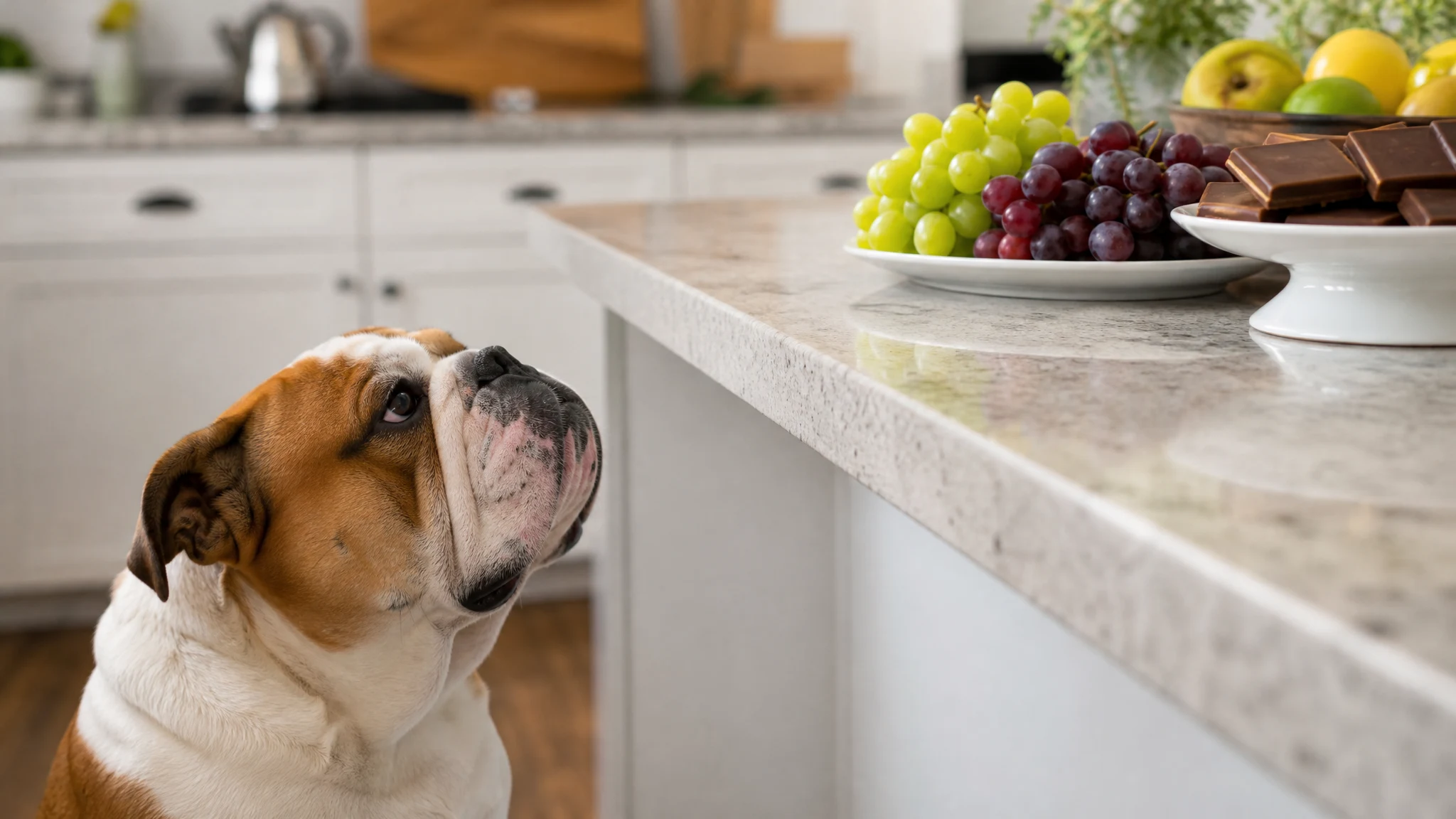
No. The ASPCA lists chocolate as toxic to dogs because it contains compounds dogs cannot clear well. Dark chocolate and baking chocolate are generally considered the more concerning kinds. Call for advice even if the amount seems small.
Are grapes and raisins safe?
No. The ASPCA lists grapes and raisins as dangerous, and they can be linked to kidney damage. The cause is not fully understood, so there is no reliable "safe" amount. Watch for them in trail mix, baked goods and cereal.
What is xylitol, and where is it hidden?
Xylitol is a sweetener that the ASPCA warns can be very dangerous for dogs. Check labels on sugar-free gum, candy, baked goods and some peanut butters. It is a good reason to read the ingredient panel before sharing anything.
Are onions and garlic really a problem?
Yes. The ASPCA lists onions, garlic, chives and leeks as harmful because they can damage red blood cells. Cooked, raw and powdered forms all count. That includes many soups, gravies and seasoned meats.
Can English Bulldogs eat macadamia nuts?
No. The ASPCA lists macadamia nuts as toxic to dogs, and they can cause weakness, vomiting and tremors. Cookies and snack mixes often contain them.
What about alcohol?
Alcohol is on the ASPCA list and affects dogs far more strongly than people. It is also in some foods, such as raw dough and certain desserts. Keep drinks out of reach, especially at parties.
Are coffee and caffeine dangerous?
Yes. The ASPCA includes coffee, tea and other caffeine sources. Grounds, tea bags and energy products can all be a problem. Treat them like medicine that must be stored high.
Why is raw bread dough on the list?
The ASPCA warns that raw yeast dough can expand in the stomach and produce alcohol as it ferments. Baked bread is a different matter, though it adds calories without much benefit. Keep proofing dough well away from the dog.
Other foods that cause trouble
Is fatty food from the table okay?
It is best avoided. Fatty trimmings, fried food and bacon add many calories quickly, which works against a breed prone to obesity (PetMD). Rich food can also upset a dog's stomach. If you want to share, pick a plain, small option instead.
Are cooked bones a good chew?
Cooked bones can splinter and are best skipped. Ask your veterinarian which chews suit your dog. Hard items are a concern for any dog, and a flat-faced breed has little room to spare if something lodges.
Can English Bulldogs eat seasoned or salty leftovers?
Plain is safer. Seasoned leftovers often hide onion, garlic or large amounts of salt. Take a small portion before you season it, or leave it out.
What if my Bulldog has food allergies or itchy skin?
PetMD notes that environmental, food and flea allergies can cause skin problems in Bulldogs, and some dogs need a special diet. Random table food makes it harder to tell what is going on. Ask your veterinarian before changing the diet, since they decide what suits an individual dog.
Safe snacks and treat limits
Can English Bulldogs eat vegetables and fruit?
Some are commonly used as low-calorie treats, such as carrot sticks, plain green beans and apple slices without seeds or core. Introduce one at a time and in small pieces. Check any new food with your veterinarian first, particularly if your dog has a sensitive stomach.
Can English Bulldogs eat plain cooked chicken?
Plain cooked chicken with no seasoning, skin or bones is a common treat. It still counts as calories. Keep pieces small so it works as a reward rather than a second meal.
How many treats are too many?
PetMD advises treats make up no more than 10% of daily calories, and that portions follow the dog's ideal weight. Your dog's main food supplies the rest. Our label comparison of foods for English Bulldogs shows how calories per cup differ, which helps you budget treats.
Does a slow feeder bowl help?
PetMD says slow feeder bowls can slow eating. That helps with gulping, but it does not make unsafe food safe. Use it for the dog's regular meals.
If your Bulldog eats something toxic
Who do I call?
Call your veterinarian or an emergency clinic, or contact ASPCA Animal Poison Control. Look up the current phone number and any consultation fee on the ASPCA website now and save it in your phone. Have it ready before you need it.
What should I have on hand when I call?
Know your dog's approximate weight, what was eaten, roughly how much, and when. Keep the packaging or ingredient list. Do not wait for symptoms to appear before calling.
Should I make my dog vomit at home?
Only if a veterinarian or poison control tells you to. Some substances cause more harm coming back up. Because Bulldogs already have airway challenges (PetMD), let the professional guide each step.
Sources
- ASPCA Animal Poison Control, list of people foods that are toxic to dogs (check the ASPCA website for the current list and contact details)
- PetMD, Bulldog breed page
- Bulldog Club of America, AKC Bulldog Breed Standard