Bulldog Nutrition and Weight: Keeping a Flat-Faced Breed Lean
General nutrition information compiled from product labels and published sources, not veterinary advice. Your veterinarian is the right person to choose a diet for your dog, especially one with a health condition.
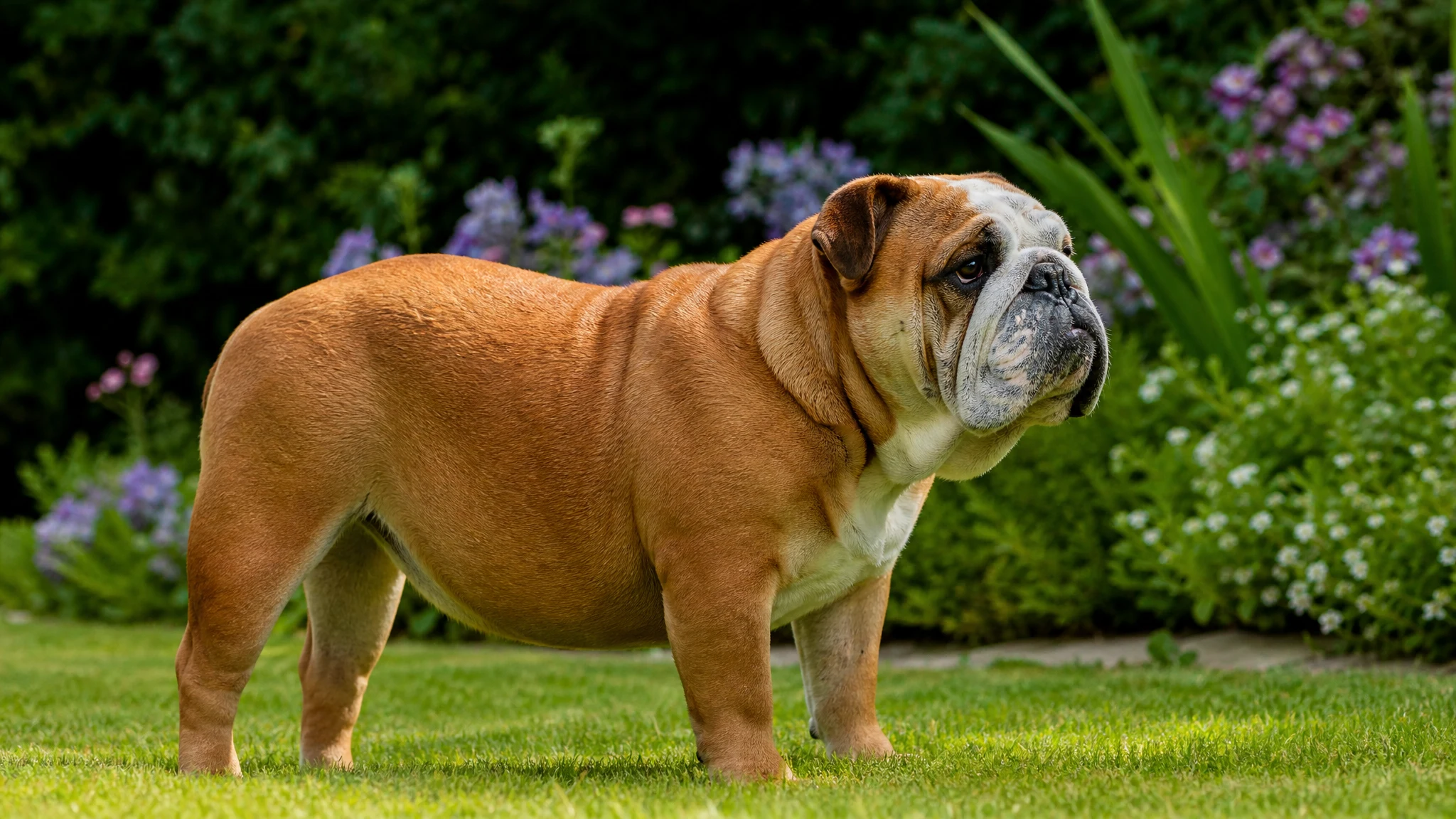
Weight is the part of bulldog nutrition that matters most for an English Bulldog. PetMD's Bulldog breed page says the breed is prone to obesity, and that extra weight makes other problems worse. Those include breathing trouble from the flat-faced skull and hip dysplasia.
This guide walks through a practical routine: how to set a target weight, measure meals, count treats and adjust. It is not a diet plan. Your veterinarian decides what is right for your individual dog.
Why lean matters for this breed
The Bulldog Club of America and the AKC breed standard describe a medium dog. Mature males are about 50 lb and mature females about 40 lb. PetMD gives a similar range of roughly 40 to 50 lb.
PetMD explains that flat-faced anatomy can cause breathing difficulty and overheating, and that excess weight makes those symptoms worse. It also says extra weight aggravates hip dysplasia. That is the reason for keeping a Bulldog lean. No food fixes these conditions, so the goal here is simply not adding avoidable strain.
For a wider look at what shapes a Bulldog's diet, see our guide to the diet factors that matter for English Bulldogs.
What you need
- The food's package or the brand's product page, so you can read the feeding guide and calorie statement.
- A kitchen scale (grams are more accurate than cups) or a standard measuring cup.
- A notebook or phone note for weights, meals and treats.
- A way to weigh your dog, such as a vet clinic scale you can visit for a quick weigh-in.
- A slow feeder bowl, optional. PetMD notes these can slow eating.
- A veterinarian's opinion on your dog's ideal weight.
Step-by-step: keeping your Bulldog lean
Step 1. Ask your vet for an ideal weight
PetMD advises basing portions on your dog's ideal weight, not the current weight. The breed standard gives a general range, but individual dogs vary in frame. Ask your veterinarian to name a target and to show you how to judge body condition by feel and by looking from above.
If your dog is already overweight, ask whether a gradual plan is appropriate. Do not cut food sharply on your own.
Step 2. Confirm the food is made for your dog's life stage
Check the nutritional adequacy statement on the label. It should say the food is formulated to meet the AAFCO Dog Food Nutrient Profiles for your dog's stage: growth, maintenance or all life stages.
Royal Canin says its Bulldog Adult formula is for Bulldogs 12 months and older. Its Bulldog Puppy page says to move to adult food after 15 months. Manufacturers differ, so ask your vet when to switch your own dog.
One note on size labels. The Whole Dog Journal explains that foods labelled for growth of large-size dogs refer to dogs of 70 lb or more as adults. An English Bulldog is well under that, so this rule does not apply to the breed.
Step 3. Read calories, not just cups
Foods vary a lot in how many calories sit in one cup. Here are label figures from the brands' own pages, which show why a cup is not a universal measure:
| Food (brand page) | Label calories |
|---|---|
| Royal Canin Bulldog Adult, dry | 277 kcal ME per cup |
| Royal Canin Bulldog Puppy, dry | 338 kcal ME per cup |
| Hill's Science Diet Adult Perfect Weight Large Breed, dry | 289 kcal per cup |
| Hill's Science Diet Adult Large Breed No Corn, Wheat, Soy, dry | 390 kcal per cup |
| Freshpet Home Cooked Chicken Recipe, fresh | 189 kcal per cup (calculated) |
Swapping one food for another at the same cup measure can change daily calories a great deal. We compared label data only. We did not run feeding trials or taste tests, and a calorie figure says nothing about how a particular dog will do on a food.
The Hill's large breed foods are labelled for dogs expected to be 55 lb or more as adults. They are not made for Bulldogs, and a vet should weigh in before you consider one. Hill's also publishes dry-matter averages, which are not the same as the guaranteed analysis on other labels, so compare protein and fat figures across brands with care.
Step 4. Start from the label guide, then measure
Use the feeding guide on the package or brand page as a starting point. For example, Royal Canin's Bulldog Adult page lists a 40 lb dog at low activity at 2 7/8 cups (219 g) per day. Treat that as a first estimate, not a rule. Hill's says to adjust amounts as needed to maintain optimal weight and to ask your veterinarian if you are unsure.
Weigh each meal on a scale if you can. Scoops and cups drift, especially with dense kibble.
Step 5. Split the day into two meals
PetMD says adult Bulldogs are typically fed twice daily. Divide the day's measured amount into two bowls. If your dog eats fast, a slow feeder bowl can help, as PetMD notes.
Step 6. Count every treat
PetMD recommends that treats make up no more than 10% of daily calories. Chews, dental sticks, chicken scraps and training rewards all count.
Use small pieces. Some owners set aside part of the daily kibble for rewards, so nothing extra is added. Ask your vet whether that suits your dog.
Step 7. Weigh and log on a schedule
Weigh your dog every two to four weeks and write down the number, the food and the daily amount. A short log shows slow drift before it becomes a bigger problem.
Take the log to checkups. Your vet can tell you whether to adjust the portion up or down.
Step 8. Adjust in small steps
If weight is creeping up, ask your vet about a modest reduction in the daily amount. If your dog is losing weight too fast or seems hungry and low on energy, tell your vet promptly. Change one thing at a time so you can see what made the difference.
If you switch foods, do it gradually and ask your vet how. A sudden change can upset digestion.
Tips
- Weight-management foods are one option, not a cure. Hill's Perfect Weight Large Breed lists 289 kcal per cup and 10.3% fiber on a dry-matter basis, but it is a large breed formula. Whether any such food suits your Bulldog is a question for your vet.
- Wet and fresh foods hold more water. Compare calories per can, pouch or cup, not weight on the package. Royal Canin's French Bulldog loaf is 70 kcal per 3 oz can, but it is a French Bulldog formula, not an English Bulldog one.
- Keep skin folds clean and dry. PetMD says trapped moisture can encourage infection. That is a grooming matter, not a diet one, but it is part of routine Bulldog care.
- Allergies need a vet. PetMD says some dogs need a special diet to manage skin allergies. Prescription diets come only from a veterinarian.
- Heart questions. The FDA's investigation into a possible link between certain diets and canine dilated cardiomyopathy had its last public update on December 23, 2022. The FDA says report counts alone do not establish a causal link. If you are worried, ask your vet about your dog's food.
Common mistakes to avoid
- Feeding by cup without checking calories. A switch of brand can quietly add or remove calories.
- Using current weight to set portions. PetMD says to base portions on ideal weight.
- Forgetting treats and table scraps. They add up fast in a medium dog.
- Assuming a Bulldog formula is a diet. Breed-specific foods exist, and PetMD suggests asking your vet about them, but a breed label does not set the right amount for your dog.
- Picking a large-breed food because it sounds sturdy. The 70 lb AAFCO rule does not apply to this breed, and large breed foods are not made for Bulldogs.
- Making big cuts in food suddenly. Gradual change under vet guidance is safer.
What results to expect
With measured portions, counted treats and regular weigh-ins, many owners find it easier to keep a dog near a target weight. Results vary with age, activity, health and genetics, and nothing here is guaranteed.
Staying lean may reduce strain on the joints and make breathing easier, since PetMD says excess weight worsens these problems. No food prevents, treats or cures hip dysplasia, breathing problems or allergies. Your veterinarian is the right person to judge progress. PetMD gives a typical life expectancy of 8 to 10 years for the breed, and weight management is one part of long-term care.
Sources
- PetMD, Bulldog breed page
- Bulldog Club of America, AKC Bulldog Breed Standard
- Whole Dog Journal, In the Fine Print: Nutritional Adequacy Statements
- FDA CVM, Investigation into Potential Link between Certain Diets and Canine Dilated Cardiomyopathy
- Royal Canin US, Bulldog Adult
- Royal Canin US, Bulldog Puppy
- Royal Canin US, French Bulldog Loaf In Sauce
- Hill's Pet, Science Diet Adult Perfect Weight Large Breed
- Hill's Pet, Science Diet Adult Large Breed No Corn, Wheat, Soy
- Freshpet, Fresh From the Kitchen Home Cooked Chicken Recipe