English Bulldog Puppy Feeding Guide: From Milk to Kibble
General nutrition information compiled from product labels and published sources, not veterinary advice. Your veterinarian is the right person to choose a diet for your dog, especially one with a health condition.
Moving a puppy from milk to solid food is simple in outline and easy to get wrong in the details. This English Bulldog puppy feeding guide walks through the steps in order. It also shows how to read a puppy food label without being swayed by the front of the bag.
One note on method. We compared label data published by the brands and breed sources listed at the end. We did not run feeding trials or taste tests, and we have not fed any of these foods to dogs.
What the breed adds to the picture
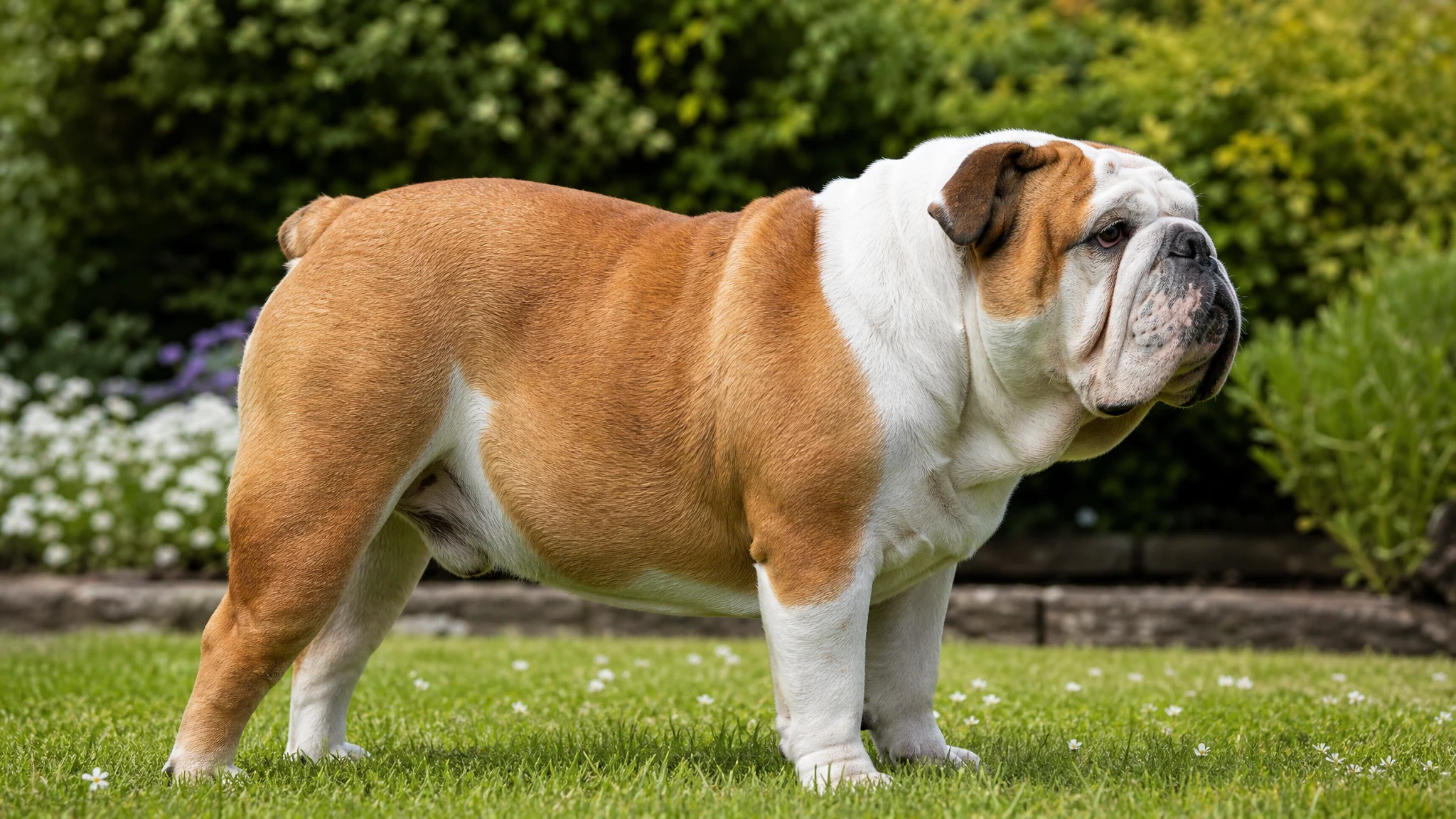
The Bulldog Club of America breed standard describes mature dogs at about 50 lb and mature bitches at about 40 lb. PetMD gives a similar range of roughly 40 to 50 lb. That makes the English Bulldog a medium breed, not a large one.
PetMD also says the breed is prone to obesity, and that extra weight makes breathing trouble (brachycephalic obstructive airway syndrome) and hip dysplasia worse. So the goal from the start is steady, lean growth, not the fattest puppy in the litter. For the wider picture, see our page on the diet factors that matter for English Bulldogs.
Materials you will need
- A complete and balanced puppy food (see the label steps below).
- A kitchen scale or a standard measuring cup, so portions are measured and not guessed.
- A shallow, stable bowl. PetMD notes that slow feeder bowls can slow down fast eaters, which suits many Bulldogs.
- Warm water to soften dry food during the switch.
- A notebook or phone note to track weight, portions and treats.
- Your veterinarian's contact details, since timing and amounts for an individual puppy are their call.
Step 1: Start with the milk stage
Puppies that are still nursing get what they need from their mother. If you are caring for a puppy that is not nursing, or one that is not gaining well, call a veterinarian first. They can advise on a suitable milk replacer and how often to feed. We have no sourced figures for feeding frequency or amounts at this age, so we will not guess.
Ask the breeder or rescue what the puppy has eaten so far, and how much. That information makes everything later easier.
Step 2: Plan the move to solid food with your vet
The timing of weaning varies by litter, and no breed source we relied on gives a single correct week for English Bulldogs. Your veterinarian and the breeder are the right people to set the pace for your puppy.
Most puppies you bring home are already eating some solid food. If so, keep feeding what they have been eating for the first few days. A new home is stressful enough without a new diet on top.
Step 3: Choose a puppy food by reading the label
Look past the front of the bag and check three things.
- The adequacy statement. It should say the food meets AAFCO nutrient profiles for growth or for all life stages. A statement for adult maintenance only is the wrong fit for a puppy.
- The ingredient list. Ingredients are listed in order, and the first few tell you most of what the food is built from.
- The calories. Calories per cup tell you how quickly a portion adds up, which matters for a breed prone to weight gain.
On size labels: according to Whole Dog Journal's explanation of AAFCO statements, foods labelled for growth "including growth of large-size dogs (70 pounds or more as an adult)" suit large-breed puppies, and foods labelled "except for growth of large-size dogs" should not be fed to them. English Bulldogs are well under 70 lb as adults, so that rule does not apply to the breed. Check with your vet which label fits your puppy.
One example from the label data
Royal Canin makes a Bulldog Puppy dry food aimed at purebred Bulldogs from 8 weeks to 15 months. Its page lists these details:
| Label detail | Royal Canin Bulldog Puppy (dry) |
|---|---|
| Adequacy statement | Formulated to meet AAFCO Dog Food Nutrient Profiles for growth |
| First five ingredients | Chicken by-product meal, brewers rice, brown rice, chicken fat, wheat gluten |
| Guaranteed analysis (as fed) | Protein 28% min, fat 15% min, fiber 4.0% max |
| Calories | 338 kcal ME per cup, calculated |
| Kibble size | Not stated on the page |
This is not a recommendation or a ranking. It shows what a breed-targeted label says, so you can hold other foods up against it. Whether it suits your puppy is a question for your veterinarian.
Step 4: Switch foods gradually
If you change foods, do it over several days. The brands in our label data do not give a switching schedule, so ask your vet for one. A common approach is to mix a little of the new food into the old and shift the ratio each day while watching the stool and appetite.
If you are moving from milk or a softer diet to dry kibble, wet the kibble with warm water and let it soften. Reduce the water over the following days as the puppy gets used to the texture.
Step 5: Measure portions and treat the label as a starting point
Every feeding guide on a bag is a starting point, not a prescription. The Royal Canin puppy page, for example, gives a daily table by puppy age and expected adult weight. Use the table, weigh or measure the food, then adjust with your vet based on how your puppy looks and how the weight trend is going.
PetMD advises basing portions on ideal weight and keeping treats to no more than 10% of daily calories. Training treats count. For a puppy, count the treats you hand out in the first week of training before you pour dinner.
We have no sourced figure for how many meals a day a Bulldog puppy needs at each age, so ask your vet. PetMD says adult Bulldogs do well on two meals a day.
Step 6: Watch the weight, not just the bowl
Weigh your puppy on a regular schedule and write the number down. Ask your vet how to judge body condition by feel, so you can tell lean from heavy by touch as well as by the scale. Bring the notes to each checkup.
Step 7: Plan the move to adult food
Brands do not agree on when to switch. Royal Canin's Bulldog Adult page describes an adult formula for Bulldogs 12 months and older, while its Bulldog Puppy page says to move to adult after 15 months. That is manufacturer guidance, not a veterinary or club standard, so ask your vet which timing fits your dog.
When the time comes, use the same gradual switch as before.
Tips that make the transition easier
- Feed in the same quiet spot at the same times each day.
- Pick up the bowl after a set time instead of leaving food out.
- Keep fresh water available, especially if you are feeding dry food.
- Do not make several changes at once. Change one thing, then wait.
- Keep notes on stool, appetite and energy so your vet has something specific to look at.
Common mistakes to avoid
- Feeding to the bag's top number. Guides cover a range of dogs. Your puppy's needs may be lower or higher.
- Picking an adult food for a puppy. An adult maintenance statement is not a growth statement.
- Buying a size label that does not match the breed. A food made for dogs of 55 lb or more as adults is sized for a bigger dog than an English Bulldog. Large-breed foods are not made for Bulldogs just because the dog is stocky.
- Letting treats pile up. Extra calories show up as extra weight, and weight is the thing this breed's breathing and joints can least afford.
- Changing foods quickly. A sudden switch can upset a puppy's stomach.
- Assuming a trend or fad ingredient is a health fix. No food prevents or treats a condition on its own. If your puppy has itching, loose stools or skin trouble, see your vet. PetMD notes that some dogs with allergies need a special diet, and only a veterinarian can decide that.
What to expect
A well-chosen, correctly measured puppy diet may help support steady growth and a healthy weight. It may also make the switch to solid food smoother. Results depend on the individual dog, genetics, and how consistently you measure and track.
PetMD gives a life expectancy of 8 to 10 years for the breed. That is a secondary source, and no diet changes it by itself. Good habits begun in puppyhood, such as measured meals and few extras, give you the best footing for managing weight over the years.
Your vet can tell you whether your puppy's growth looks on track. If appetite drops, stools stay loose, or weight changes quickly in either direction, call them.